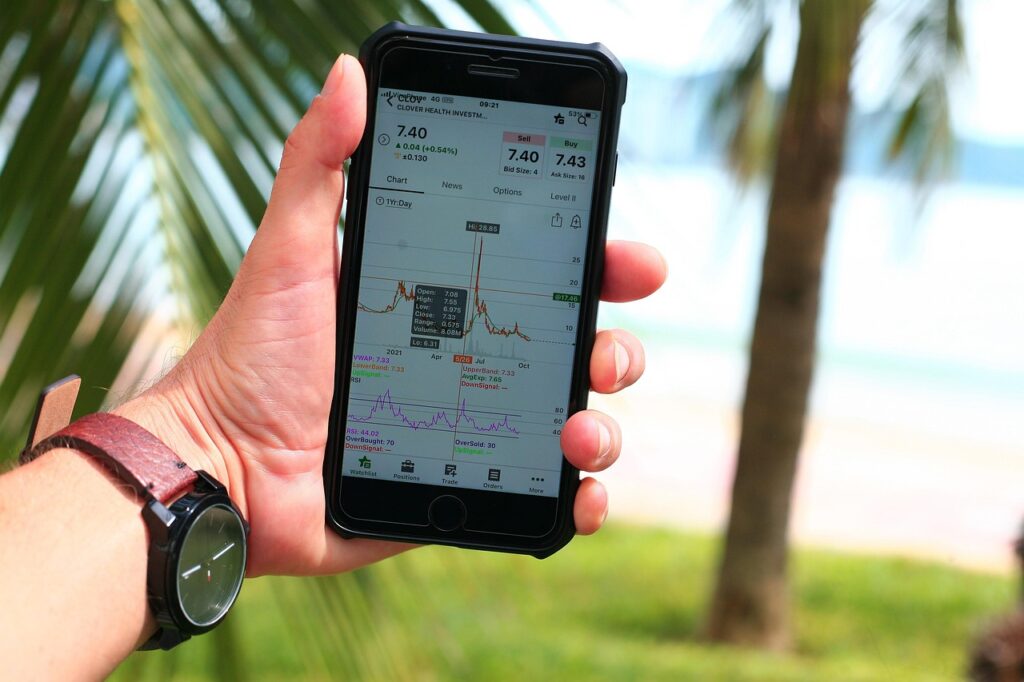

Making Sense of Market Movements in 2026
Technical analysis is still standing for one reason: it works. In a market flooded with headlines, sentiment shifts, and algo fueled volatility, charts act like a compass. They don’t promise certainty but they help traders spot patterns, define risk, and ignore emotional noise. Price leaves footprints. Technicals track them.
Smart investors aren’t throwing darts. They’re checking moving averages for trend direction, watching RSI for momentum turns, and using volume as a reality check. Even long term holders use charts to fine tune entry and exit points. It’s not about predicting the future; it’s about managing it one setup at a time.
That said, charts alone aren’t enough. In 2026, macro context hits harder than ever. Interest rates, inflation data, and central bank language are baked into market movement. The pros blend technical setups with economic signals to stay ahead of the curve not behind it. A bullish pattern means little if the Fed is about to slam on the brakes.
For more context on how macro drives the charts, see How Interest Rates Are Affecting the Global Economy.
Most Useful Technical Indicators Right Now
Technical indicators help traders and investors interpret price data and make more informed decisions. In 2026, with markets moving faster and more data at traders’ fingertips than ever, using the right tools is critical.
Moving Averages (MA & EMA)
Purpose:
Identify trend direction
Smooth out market “noise”
Key Types:
Simple Moving Average (SMA): Takes the average of closing prices over a set time period (e.g., 50 day or 200 day)
Exponential Moving Average (EMA): Gives more weight to recent data for a faster response to price changes
How They’re Used:
Signal when trends are forming or reversing
Spot support and resistance levels
Watch for crossovers (e.g., 50 day EMA crossing above 200 day EMA as a bullish sign)
Relative Strength Index (RSI)
Purpose:
Identify whether a stock is overbought or oversold
How It Works:
RSI is a momentum oscillator that ranges from 0 to 100
Traditionally, readings above 70 suggest overbought conditions
Readings below 30 signal oversold levels
Why It Matters Now:
Overreaction to news and events creates RSI extremes faster
Used to time entries and exits with more precision
MACD (Moving Average Convergence Divergence)
Purpose:
Track trend direction, strength, and momentum shifts
Main Components:
MACD Line: The difference between short term (12 day) and long term (26 day) EMAs
Signal Line: A 9 day EMA of the MACD line
Histogram: Shows the distance between the MACD and Signal Line
Trading Insights:
A crossover above the Signal Line = potential buy
A crossover below = potential sell
Histogram divergence may warn of a weakening trend
Bollinger Bands
Purpose:
Measure volatility and assess breakout potential
Structure:
Middle Band: 20 day simple moving average
Upper & Lower Bands: 2 standard deviations above and below the middle band
Use Cases:
Price hitting upper band: possible overbought
Price at lower band: possible oversold
Bands tightening: likely upcoming breakout
2026 Note:
With increased market noise from automated trading, Bollinger Band compression patterns can offer clearer breakout signals than ever before.
Chart Patterns That Still Matter

Classic patterns like head and shoulders, double bottoms, and continuation formations flags and pennants still hold weight in 2026. They’re visual shortcuts to understanding crowd behavior, and when used correctly, they give traders a leg up on timing entries and exits.
A head and shoulders formation, for example, often signals a trend reversal. Double bottoms? A possible launchpad for price recovery. Flags and pennants tend to pop up during healthy consolidation phases before price resumes its original trajectory. These patterns aren’t magic, but they reflect human psychology baked into charts.
Still, patterns lie. They break down when forced, cherry picked, or viewed in isolation. That’s where volume matters. If price appears to be breaking out of a flag but volume isn’t confirming flat or declining be cautious. Strong volume often acts as the truth serum of chart setups. In a world awash in algorithmic noise and simulated trades, volume confirmation helps filter signal from distraction.
So even in 2026’s data heavy, AI layered landscape, pattern recognition has a place. But only when paired with control, skepticism, and real confirmation.
Trading Smarter with Multiple Signals
One indicator can give you a clue. Two or more working together? That’s where real confidence starts. In 2026, successful traders are blending tools like MACD, RSI, and EMAs to build a sharper edge. The goal isn’t complexity it’s clarity. When indicators are saying the same thing from different angles, that’s a signal worth acting on.
But there’s a fine line. Overload your screen with too many tools, and you’ll freeze. “Analysis paralysis” is real. The key is choosing a few well tested indicators and sticking to a rule based system. You don’t need seven green lights usually, two solid confirmations are enough.
Take the Q1 2026 rally. In early February, the MACD on several S&P 500 stocks flipped bullish with a clean crossover, just as the RSI hovered around the oversold 30 level. That combo was a green flag. Traders who moved early caught a major swing. Waiting for more validation might’ve cost them the run.
Bottom line: stack your indicators with purpose and know when it’s time to pull the trigger.
Data Is Everywhere Now It’s About Discipline
Technical indicators can be tempting. They make patterns look clear, timing seem obvious. But here’s the truth: no indicator is bulletproof. MACD, RSI, Bollinger Bands they’re all reactive, not predictive. Rely on them blindly, and you’re gambling, not trading.
The traders who stuck around in 2025 and the ones still in the game today share one habit: testing. Backtesting isn’t glamorous, but it’s the difference between a strategy that works once and one that works long term. Rule based entries, with predefined stop losses and exits, aren’t just for algorithmic traders. They’re insurance for your capital, especially when the market flips without warning.
And flips do happen. Global instability isn’t a trend it’s the baseline now. Factor in AI driven market sentiment, where bots can shift stock prices in milliseconds, and gut feeling trades just don’t cut it. Adapting your approach doesn’t mean chasing every new signal. It means tightening your process and staying clear eyed when the noise picks up.
In this climate, discipline beats prediction. The edge goes to those who don’t just run the numbers they trust their systems, adjust when needed, and know exactly why they’re pulling the trigger.
Final Word: Use Your Tools, But Trust No Shortcut
By now, it’s clear: technical indicators aren’t magic. MACDs, RSIs, moving averages they help frame moves, spot trends, signal reversals. But none of them make sense without context. What’s price actually doing? What’s the story behind the move?
In 2026, real signals come from layering the technicals on top of the bigger picture. If interest rates are climbing and the central bank’s hawkish, a bullish pattern on your chart might just be noise. Macro like inflation data and policy updates is still steering the ship. So yes, plot your setups, but check the tide before jumping in.
This year, smart traders aren’t trying to forecast the future in one perfect trade. They’re managing risk, reacting faster, and relying less on gut feelings. Technical analysis has evolved. It’s not for guessing it’s for navigating the storm without losing your head.
 There is a specific skill involved in explaining something clearly — one that is completely separate from actually knowing the subject. Zyphara Zorvane has both. They has spent years working with business finance insights in a hands-on capacity, and an equal amount of time figuring out how to translate that experience into writing that people with different backgrounds can actually absorb and use.
Zyphara tends to approach complex subjects — Business Finance Insights, Investment Strategies and Trends, Expert Business Advice being good examples — by starting with what the reader already knows, then building outward from there rather than dropping them in the deep end. It sounds like a small thing. In practice it makes a significant difference in whether someone finishes the article or abandons it halfway through. They is also good at knowing when to stop — a surprisingly underrated skill. Some writers bury useful information under so many caveats and qualifications that the point disappears. Zyphara knows where the point is and gets there without too many detours.
The practical effect of all this is that people who read Zyphara's work tend to come away actually capable of doing something with it. Not just vaguely informed — actually capable. For a writer working in business finance insights, that is probably the best possible outcome, and it's the standard Zyphara holds they's own work to.
There is a specific skill involved in explaining something clearly — one that is completely separate from actually knowing the subject. Zyphara Zorvane has both. They has spent years working with business finance insights in a hands-on capacity, and an equal amount of time figuring out how to translate that experience into writing that people with different backgrounds can actually absorb and use.
Zyphara tends to approach complex subjects — Business Finance Insights, Investment Strategies and Trends, Expert Business Advice being good examples — by starting with what the reader already knows, then building outward from there rather than dropping them in the deep end. It sounds like a small thing. In practice it makes a significant difference in whether someone finishes the article or abandons it halfway through. They is also good at knowing when to stop — a surprisingly underrated skill. Some writers bury useful information under so many caveats and qualifications that the point disappears. Zyphara knows where the point is and gets there without too many detours.
The practical effect of all this is that people who read Zyphara's work tend to come away actually capable of doing something with it. Not just vaguely informed — actually capable. For a writer working in business finance insights, that is probably the best possible outcome, and it's the standard Zyphara holds they's own work to.