
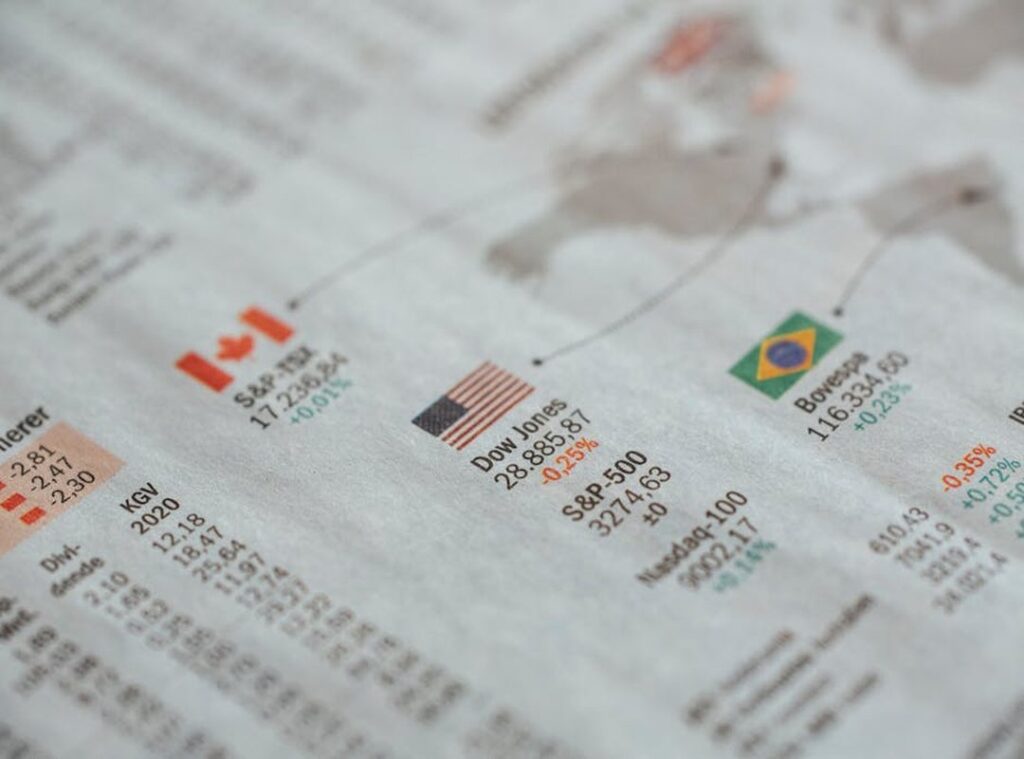
You open your phone and see three headlines in five minutes.
Market crashing. Bull run confirmed. Wait.
What just happened to interest rates?
I’ve been there. Staring at the screen, wondering if I should sell everything or buy more.
It’s exhausting. And useless.
Finance Updates Discapitalied isn’t about keeping up with every headline. It’s about knowing which ones actually affect your money.
I stopped reading financial news like it was a duty. Started asking why instead of what.
Turns out, most of it doesn’t matter to you. Not really.
This article gives you one simple filter. One question to ask before reacting.
No jargon. No predictions. Just clarity.
I’ve used this with people who got laid off, bought homes, paid off debt. All without checking the market daily.
You’ll walk away knowing exactly what to ignore (and) what to act on.
The Big Difference: Reporting vs. Analysis
I read financial news every day.
Most of it is just noise.
Reporting tells you what happened.
Analysis tells you why it matters (and) what might happen next.
Say a stock drops 12% in one day. A reporter writes: “XYZ Corp plummets after earnings miss!”
That’s reporting. It’s fine.
But it’s not enough.
An analyst digs deeper. They compare margins over five years. They check inventory levels.
They talk to suppliers. Then they say: “This isn’t about one quarter (it’s) about leadership turnover and a broken supply chain.”
That’s analysis. That’s what changes decisions.
Sensational headlines trigger FOMO. Or FUD. You see “Bitcoin crashes!” and panic-sell.
You see “AI stocks exploding!” and chase the top. Neither helps you build wealth. Both help someone else sell ads.
Here’s how I spot low-value financial content:
Does it scream instead of explain? Does it skip data or context? Does it promise fast money?
The goal isn’t to ignore all news. It’s to build a filter. A real one.
If yes to any. Walk away.
Not a habit.
This guide helped me cut through the clutter. It’s where I learned to separate signal from noise. Especially when sorting through Finance Updates Discapitalied.
I used to refresh CNBC every 90 seconds.
Now I check once a week. And only after my coffee.
Pro tip: Turn off notifications for every finance app except your broker. Your portfolio won’t crash. Your peace of mind might.
You don’t need more updates.
You need better judgment.
The Three Signals That Actually Matter to Your Money
Most finance noise is just noise. I ignore 90% of it. You should too.
Here are the three signals I watch. Not daily stock moves. Not influencer hot takes.
Real things that move your paycheck, rent, and retirement.
It’s why your landlord raised rent 8%. It’s why your $500 paycheck buys less than it did last year.
Inflation is one. It’s not some abstract number on a chart. It’s why your grocery bill jumped $12 last month.
GDP? Just total economic output. Think of it like a city’s electricity meter (high) reading means lots of activity, low reading means things are slowing.
Unemployment? That’s how many people who want work can’t find it. When it drops, wages often rise.
When it spikes, layoffs follow.
The Federal Reserve watches those numbers like a hawk. Then they raise or lower interest rates. That decision hits you directly.
In your car loan rate, your credit card APR, even whether your savings account pays 0.01% or 4.2%.
Major industry shifts matter more than quarterly earnings.
Not “what did Tesla report yesterday?” but “is AI reshaping every white-collar job?”
Not “oil prices spiked today” but “are we really shifting from fossil fuels (and) what does that mean for pipeline workers or solar installers?”
You don’t need to predict the future.
You just need to spot where the ground is already moving.
I stopped checking stock tickers daily five years ago.
My net worth grew faster after that.
Finance Updates Discapitalied? Skip it. It’s usually recycled headlines dressed up as insight.
Pro tip: Bookmark the Bureau of Labor Statistics and the Fed’s official site. No commentary. Just raw data.
You’ll see patterns faster than any newsletter.
What’s your rent doing this year? That’s inflation. That’s real.
Everything else is background static.
The So What? Test: Your Weekly Financial Reality Check

I read the news. You read the news. Most of it is noise.
So what?
That’s the only question that matters. Not “What happened?” but “So what does this mean for my savings, my debt, and my long-term goals?”
I tried ignoring inflation reports. Then I watched my grocery bill jump 18% in six months. That’s when I started asking so what.
Every time.
Last month’s CPI report said inflation cooled to 3.4%. Okay. So what?
So my emergency fund loses less ground each month. So my student loan refi window just opened wider. So I delayed buying that used car (rates) might dip again next quarter.
You don’t need a degree to run this test. Just pen, paper, and five minutes.
Here’s my 15-Minute Weekly Financial Review:
Every Sunday. Same time. Same chair.
No phone.
First, scan one trusted source (like) this post. For only the three biggest signals from the week. Not headlines.
Signals. (A Fed comment. A jobs number shift.
A housing permit uptick.)
Then ask so what for each. Out loud if you have to. Write down one action or one thing to watch.
Not ten. One.
That’s it.
Consistency beats intensity. Always. I’ve seen people spend eight hours on a Saturday reading market commentary.
Does that sound familiar?
Then ignore their credit card balance for three months.
It’s not about knowing everything. It’s about knowing what to do next.
Skip the panic. Skip the rabbit holes. Ask so what.
And write the answer down.
That’s how insight happens. Not in bursts. In rhythm.
Finance Updates Discapitalied isn’t about prediction. It’s about calibration.
You don’t need more data.
You need better questions.
Start with so what.
Do it this Sunday.
No prep needed. Just show up.
Your Info Diet Matters More Than You Think
I treat information like food. Bad sources give you brain fog. Good ones sharpen your thinking.
Quantity doesn’t help. Clarity does.
FRED is my go-to for raw numbers. No spin. Just data you can chart yourself.
(It’s free. And it’s federal.)
Economic newsletters from places like the Dallas Fed or Richmond Fed? They skip the hype. They explain why inflation dipped.
Not just that it did.
Not yours.
Big banks’ research arms? Use them sparingly. Their forecasts often serve internal sales goals.
You want analysis. Not astrology dressed as economics.
Finance Updates Discapitalied isn’t a thing. It’s a warning sign. When capital gets misallocated, signals get noisy.
What Capital Can You Allocate Discapitalied
That question changes everything.
You’re Done Being Hijacked by Headlines
I felt that panic too. Waking up to five urgent finance alerts before coffee. Your stomach drops.
You don’t know what matters.
That’s why I built the three-signal filter. And the Finance Updates Discapitalied test.
It’s not about reading less. It’s about trusting your own judgment again.
This week, pick one major financial headline you see. Ignore the noise. Ask: So what? Then write down one concrete thing it means for your budget, debt, or goals.
That’s it. No apps. No subscriptions.
Just you, a sentence, and your power back.
You’re not reacting anymore.
You’re writing the story.
 Ask Amy Glazerela how they got into market analysis and reports and you'll probably get a longer answer than you expected. The short version: Amy started doing it, got genuinely hooked, and at some point realized they had accumulated enough hard-won knowledge that it would be a waste not to share it. So they started writing.
What makes Amy worth reading is that they skips the obvious stuff. Nobody needs another surface-level take on Market Analysis and Reports, Investment Strategies and Trends, Wealth Management Strategies. What readers actually want is the nuance — the part that only becomes clear after you've made a few mistakes and figured out why. That's the territory Amy operates in. The writing is direct, occasionally blunt, and always built around what's actually true rather than what sounds good in an article. They has little patience for filler, which means they's pieces tend to be denser with real information than the average post on the same subject.
Amy doesn't write to impress anyone. They writes because they has things to say that they genuinely thinks people should hear. That motivation — basic as it sounds — produces something noticeably different from content written for clicks or word count. Readers pick up on it. The comments on Amy's work tend to reflect that.
Ask Amy Glazerela how they got into market analysis and reports and you'll probably get a longer answer than you expected. The short version: Amy started doing it, got genuinely hooked, and at some point realized they had accumulated enough hard-won knowledge that it would be a waste not to share it. So they started writing.
What makes Amy worth reading is that they skips the obvious stuff. Nobody needs another surface-level take on Market Analysis and Reports, Investment Strategies and Trends, Wealth Management Strategies. What readers actually want is the nuance — the part that only becomes clear after you've made a few mistakes and figured out why. That's the territory Amy operates in. The writing is direct, occasionally blunt, and always built around what's actually true rather than what sounds good in an article. They has little patience for filler, which means they's pieces tend to be denser with real information than the average post on the same subject.
Amy doesn't write to impress anyone. They writes because they has things to say that they genuinely thinks people should hear. That motivation — basic as it sounds — produces something noticeably different from content written for clicks or word count. Readers pick up on it. The comments on Amy's work tend to reflect that.