7 Best Green Packaging Solutions for Growing Companies in 2026
Most brands don’t realize they’re paying a greenwashing tax until a customer calls them out on it. Choosing the best green packaging means cutting through vague “eco-friendly” claims, balancing real material performance with product protection, and keeping costs from spiraling past conventional plastic alternatives. After reviewing dozens of packaging providers across certifications, material sourcing, and real customer feedback, the gap between authentic environmental responsibility and marketing fluff becomes very clear. This guide covers five providers that actually deliver on their green promises.
How the picks were chosen
Each option was put through a review process drawing from publicly available sources, including customer feedback, feature pages, rating platforms, and real case studies. Only companies with a demonstrated track record in sustainable packaging made the cut.
→ See the full research breakdown
- EcoPackables – Best for Brands Looking for Sustainable Custom Mailers
-
Plus Packaging – Best for Eco-Friendly Custom Packaging With Personalized Service
- Arka – Best for e-commerce and DTC brands seeking sustainable, customizable packaging with low minimums
- noissue – Best for sustainable custom packaging for e-commerce brands and retailers
- Packlane – Best for custom sustainable packaging and branded box design
- Packola – Best for small business and entrepreneur custom packaging
- EcoEnclose – Best for ecommerce companies seeking the most rigorous sustainable packaging standards
Why Green Packaging Is Worth the Investment
Switching to green packaging isn’t just a feel-good move. The real challenge is finding options that protect your product through transit, meet food-contact or safety regulations, and don’t blow your per-unit budget by 40% compared to conventional plastic. That balancing act is where most brands stumble.
The upfront cost gap between recycled or renewable materials and standard plastics is real. But brands that choose the right packaging see measurable returns through lower carbon emissions per unit, better post-consumer recycling rates, and stronger consumer loyalty.
Getting the choice wrong means wasted investment in materials that underperform or certifications that don’t hold up to scrutiny. The right green packaging provider brings down your packaging-to-product weight ratio, reduces your CO2e per shipment, and gives you content you can actually use in your environmental reporting.
Green Packaging Comparison Table
Note: All data in this table is sourced from review platforms and the official websites of the listed companies.
| Company Name | Years Operating | Headquartered In |
| Arka | Since 2015 | San Francisco, CA |
| noissue | Since 2017 | Auckland, New Zealand |
| Packlane | Since 2015 | Sherman Oaks, CA |
| Packola | Since 2017 | Los Angeles, CA |
| EcoEnclose | Since 2010 | Louisville, CO |
-
EcoPackables – Best for Brands Looking for Sustainable Custom Mailers
What Is EcoPackables’ Main Function?
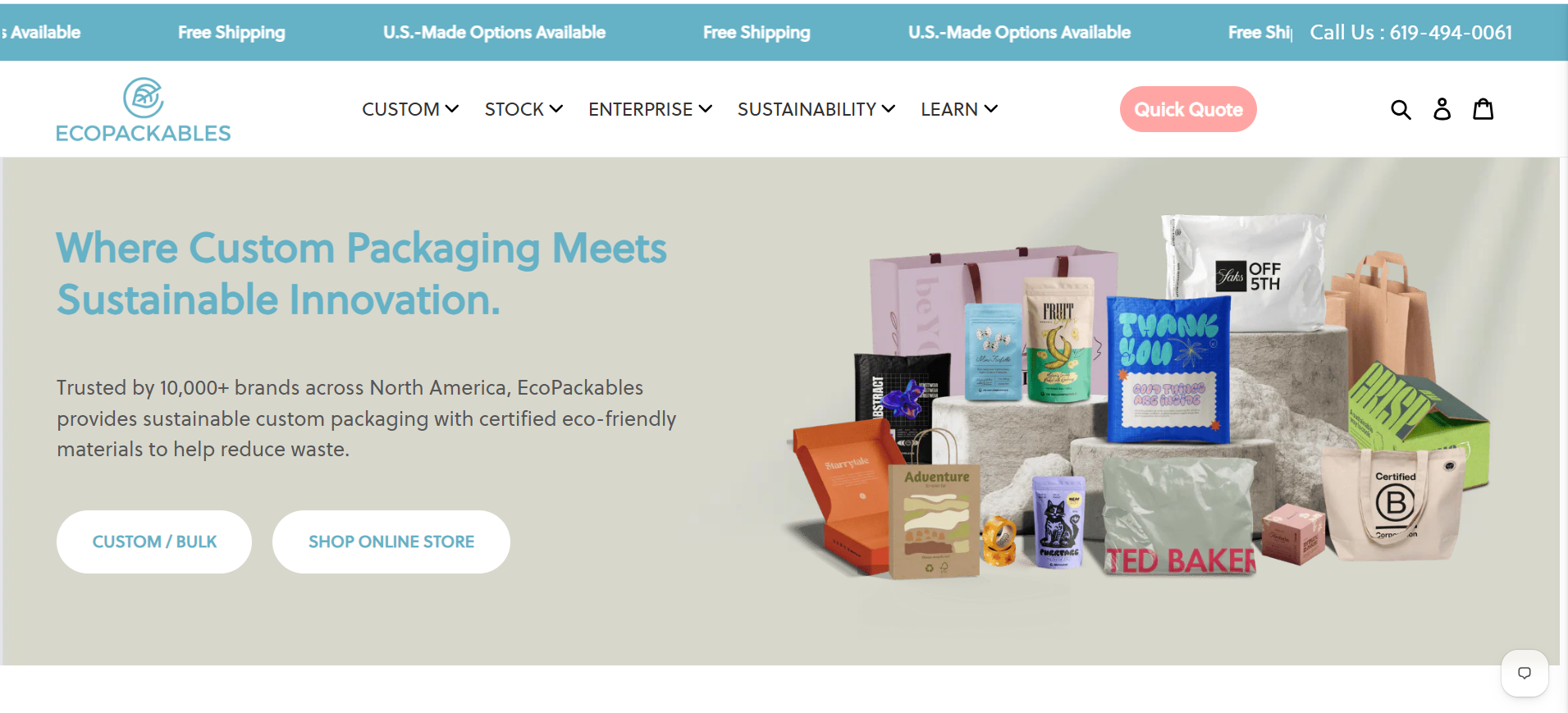
Printed custom mailers by EcoPackables offer businesses an environmentally responsible way to package their products while reinforcing brand identity. The company provides a range of sustainable mailers, including compostable, recycled, and paper-based options, designed for e-commerce, retail, and subscription brands seeking packaging with a lower environmental impact.
What’s EcoPackables’ Edge in Eco-Friendly Packaging Providers?
EcoPackables distinguishes itself by pairing eco-conscious materials with customizable packaging solutions. Businesses can choose from mailers made with recycled, recyclable, or compostable materials, making it easier to align packaging choices with sustainability initiatives while maintaining a polished, branded presentation. Its versatile product range serves businesses across multiple industries that prioritize both environmental responsibility and product quality.
The Review Roundup:
Customers consistently commend EcoPackables for its well-made packaging, dependable material quality, and dedication to sustainable practices. Reviews also highlight the company’s broad product selection, responsive service, and straightforward ordering process. Many businesses appreciate the combination of eco-friendly materials, customization options, and reliable performance, making EcoPackables a trusted choice for sustainable branded packaging.
-
Plus Packaging – Best for Eco-Friendly Custom Packaging With Personalized Service
What Packaging Does Plus Packaging Offer?
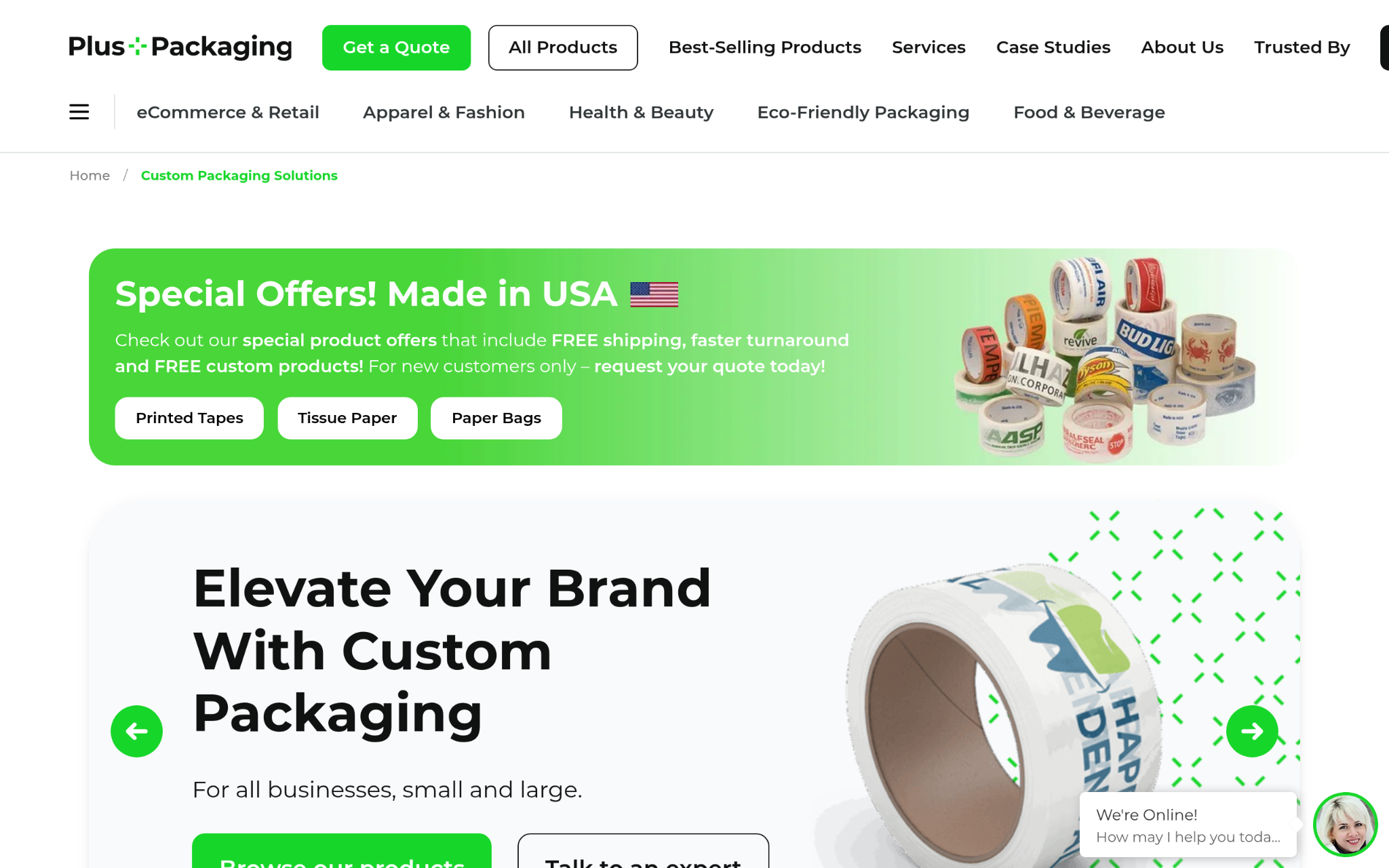
Plus Packaging offers a broad selection of customizable packaging solutions, with custom poly mailers being one of its core products. Its product range also includes printed boxes, tissue paper, kraft paper tape, reusable tote bags, and packaging inserts. The company provides both compostable and recyclable material options, making it a strong choice for brands looking to reduce their environmental impact without sacrificing quality or durability. Unlike many providers that rely on automated workflows, every project is managed through a personalized, human-led process.
Why Is Plus Packaging a Top Custom Poly Mailer Manufacturer?
From User Reviews
Customers frequently highlight Plus Packaging’s responsive communication, attentive customer service, and hands-on guidance throughout the ordering process. Many reviews emphasize the value of working directly with a dedicated team rather than an automated system. As a women-owned business established in 1978, Plus Packaging has built a strong reputation for delivering consistent service and high-quality custom packaging solutions.
-
Arka – Best for E-Commerce and DTC Brands Seeking Sustainable, Customizable Packaging
What Is Arka’s Main Function?
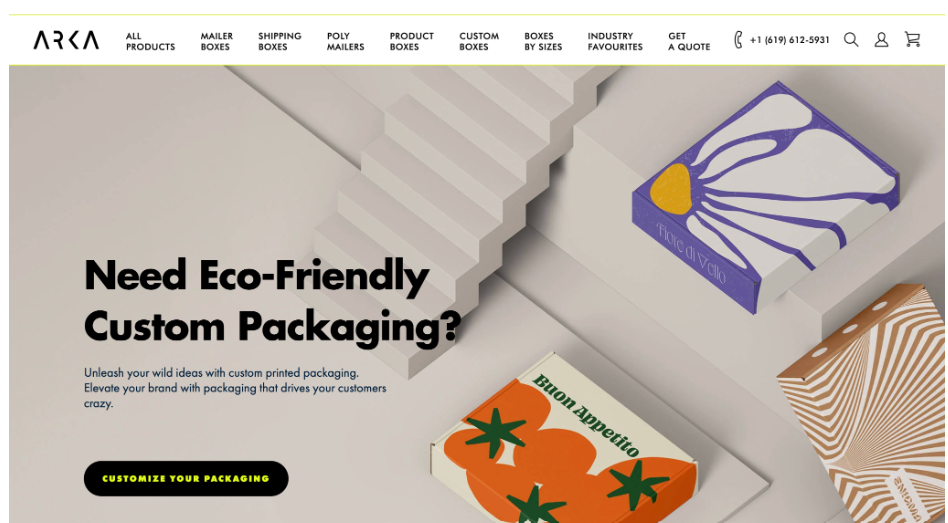
Arka is a San Francisco-based packaging company built for e-commerce and direct-to-consumer brands. They offer custom mailer boxes, shipping boxes, poly mailers, and folding cartons, all with eco-friendly material options integrated from the start. Their platform connects directly with Shopify and BigCommerce, which removes a lot of the manual coordination that slows brands down. The standout detail is their 3D Design Studio combined with an AI-driven inventory management API, making sustainable packaging accessible without requiring a large procurement team.
What’s Arka’s Edge in Green Packaging?
Arka solves one of the biggest friction points in sustainable packaging: getting started without committing to massive minimum order quantities. Their FSC-certified recycled paper and 100% compostable poly mailers (made from cornstarch and PBAT) mean brands can make real environmental claims, not just vague ones. That kind of material transparency is genuinely hard to match at this price range.
The Review Roundup:
Customers consistently point to Arka’s customer service as a real differentiator. The founder reportedly steps in personally during peak periods, which signals a level of accountability that larger operations rarely replicate. Brands also appreciate the one-unit sample ordering policy (not common in this space), which lets teams validate packaging quality before committing to bulk runs.
-
noissue – Best for Sustainable Custom Packaging for E-Commerce Brands and Retailers
What Is noissue’s Main Function?
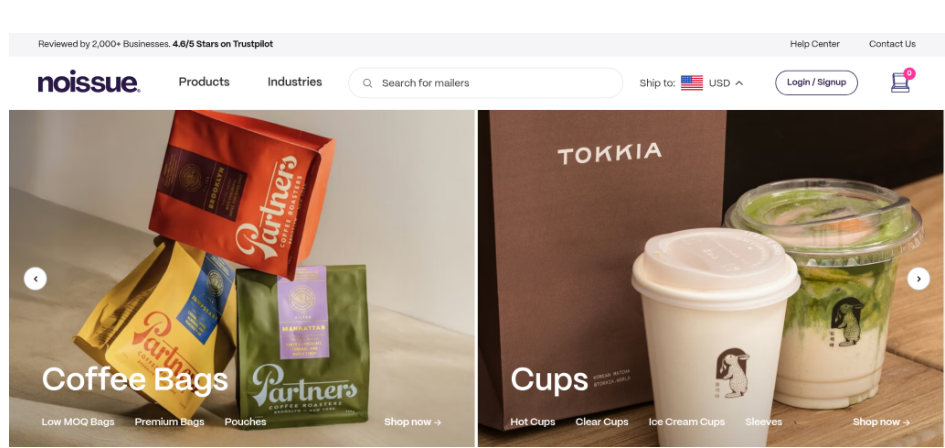
Noissue is an Auckland-based sustainable packaging company founded in 2017. They supply custom eco-friendly boxes, tissue wraps, compostable mailer bags, paper stickers, and water-activated tapes, all printed with soy-based inks on FSC Certified materials. Their online design platform is intentionally simple, with low minimums and free worldwide shipping built in. Honestly, the combination of B Corporation certification and a client list that includes Allbirds and Aesop tells you a lot about who trusts them with their brand experience.
What’s noissue’s Edge in Green Packaging?
Noissue removes the most common barrier to sustainable packaging adoption: the assumption that going green means sacrificing design quality or paying enterprise-level prices (think $10M Series A backing, so the infrastructure is there). Their B Corp certification adds a layer of accountability that most packaging suppliers can’t claim, which builds trust for brands that need to back up their environmental positioning with real credentials.
The Review Roundup:
The brand’s reputation leans heavily on its verified certifications and the caliber of its client roster. Brands in the beauty and lifestyle space particularly gravitate toward noissue because the packaging output holds up visually alongside premium product presentation. That kind of design-meets-sustainability balance is rare at accessible minimums.
-
Packlane – Best for Custom Sustainable Packaging and Branded Box Design
What Is Packlane’s Main Function?
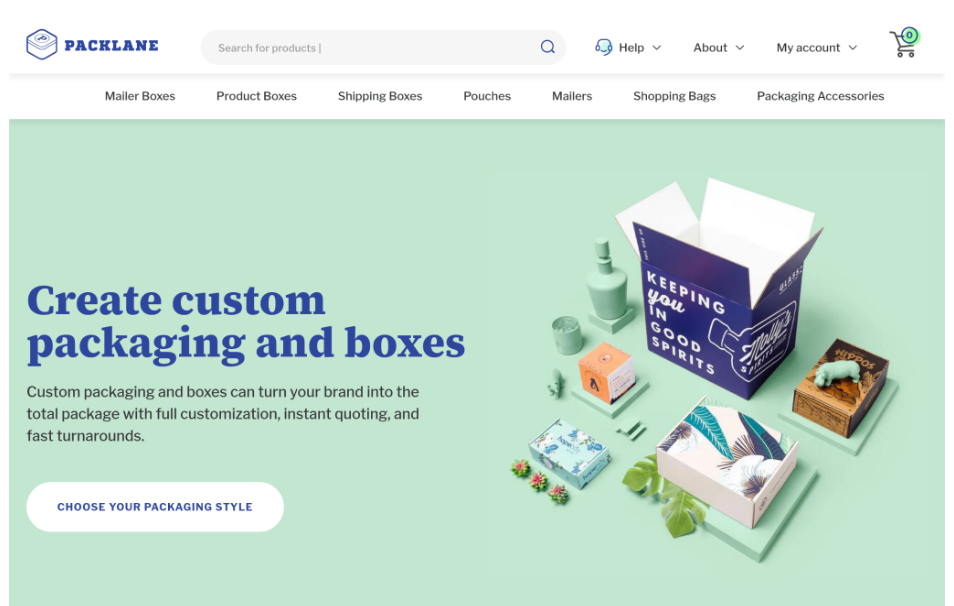
Packlane is an online platform for custom packaging design and production, founded in 2015 out of Sherman Oaks, California. They offer printed mailer boxes, shipping boxes, and product boxes through a 3D design tool that generates real-time price quotes as you build. More than 25,000 brands have used them, including Everlane, Benefit Cosmetics, and L’Oreal. Their production turnaround runs under 10 days for most orders, which makes them a strong fit for brands that can’t afford long lead times on packaging refreshes.
What’s Packlane’s Edge in Green Packaging?
Packlane addresses the design friction that often slows down sustainable packaging decisions, particularly the gap between “wanting custom eco-friendly boxes” and “actually getting them produced without a design team.” Their use of recyclable materials and soy-based inks means brands don’t have to trade sustainability for speed or visual quality.
The Review Roundup:
Customers across the 25,000-brand user base tend to appreciate the ease of the design tool and the reliability of the production timeline. The instant pricing feature stands out as particularly useful for procurement teams who need cost visibility before finalizing orders. And the brand’s scale gives it a credibility that newer platforms are still working toward.
-
Packola – Best for Small Business and Entrepreneur Custom Packaging
What Is Packola’s Main Function?
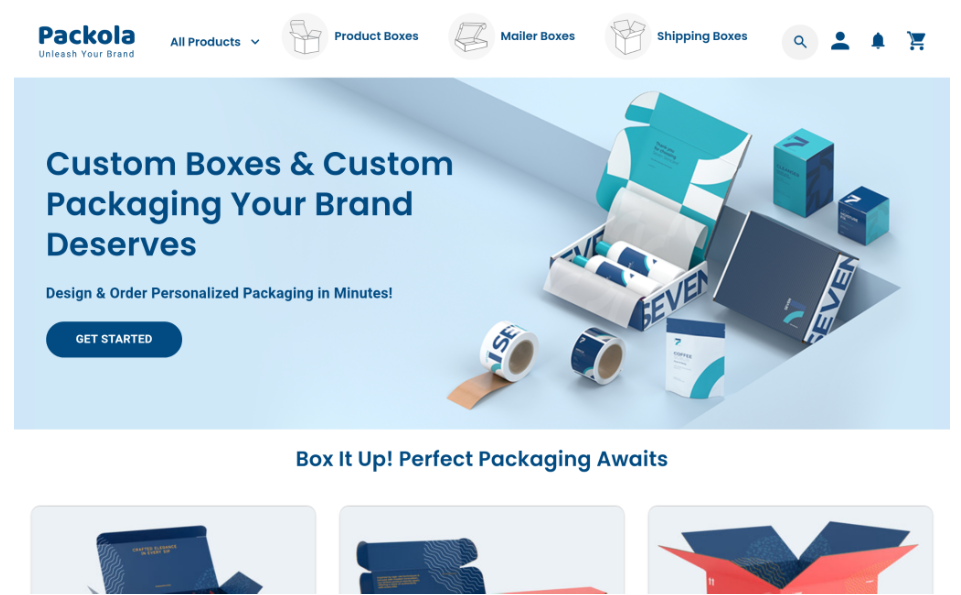
Packola is a Los Angeles-based custom packaging platform designed with small businesses and entrepreneurs in mind. They cover product boxes, mailer boxes, shipping boxes, and custom labels, all through an intuitive online design tool. There are no minimum order requirements, which is a genuine differentiator for early-stage brands. Their production is US-based (Van Nuys, California), which keeps transportation emissions lower and turnaround times more predictable (standard is 12-15 business days). They also inspect every design for print-readiness before production starts.
What’s Packola’s Edge in Green Packaging?
Packola addresses the “we’re too small to order sustainably” problem that shuts a lot of independent brands out of eco-friendly packaging entirely. Their sustainably sourced papers, environment-friendly inks, and domestic production combine to offer a credible green profile without requiring minimum commitments that a small operation can’t absorb.
The Review Roundup:
Packola ranks well for site ease of use and customer service quality, especially among small to mid-sized business owners. The no-minimum policy and straightforward return accommodations make it a low-risk starting point for brands that are still figuring out their packaging identity. That accessibility is hard to argue against for a founder-stage operation.
-
EcoEnclose – Best for Ecommerce Companies Seeking the Most Rigorous Sustainable Packaging Standards
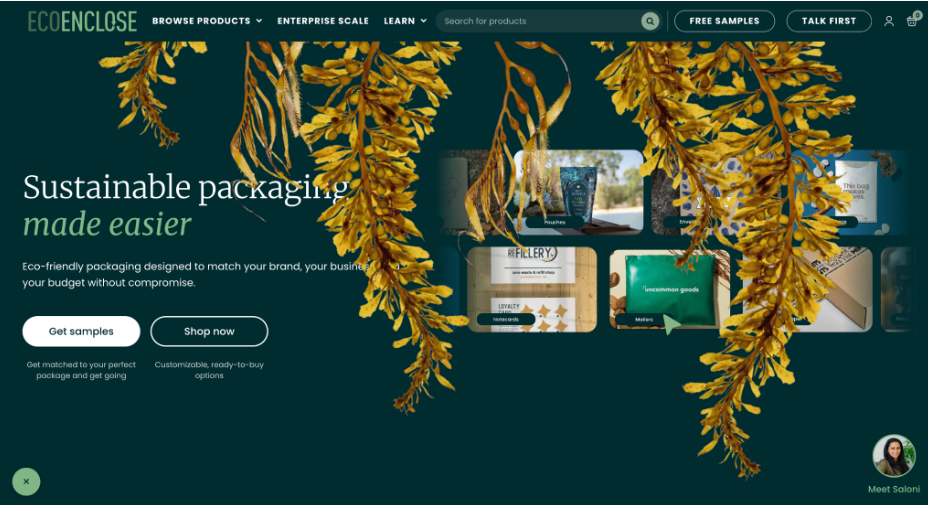
What Is EcoEnclose’s Main Function?
EcoEnclose is a manufacturing company founded in 2010, based in Louisville, Colorado, focused entirely on environmentally friendly packaging and shipping supplies for ecommerce brands. Every product uses 100% post-consumer recycled content, with zero virgin plastics in their supply chain. They’ve diverted 47 million pounds of waste from landfills and serve more than 25,000 customers. Their Climate Neutral Certification and B Corporation status (94.3 score, top 10% globally) set a benchmark that most packaging suppliers don’t come close to matching (not cheap, but worth it for brands that need hard data behind their environmental claims).
What’s EcoEnclose’s Edge in Green Packaging?
EcoEnclose solves the greenwashing problem at its root by using only post-consumer recycled materials with full supply chain transparency, removing the ambiguity that plagues most “eco-friendly” packaging claims. Being the first packaging company in Colorado to achieve Climate Neutral Certification isn’t a marketing badge. It’s a third-party verification that holds up under scrutiny, and that matters for brands reporting on their carbon emissions per unit produced.
The Review Roundup:
EcoEnclose’s reputation is built on measurable impact rather than brand aesthetics. Enterprise and scaling ecommerce brands gravitate toward them because the certifications are verifiable and the material claims are backed by real numbers. The company’s B Corp score, which places it in the top 10% globally, is the kind of signal that procurement teams and sustainability managers cite when justifying a supplier choice.
Selection Framework: How Each Pick Was Evaluated
The goal was to surface green packaging providers that deliver real environmental results for growing businesses, not just ones with polished websites and vague environmental messaging. Here’s how the research was structured.
Establishing Your Foundation Dataset
The starting point was building a broad list of packaging companies operating in the sustainable space. That list came together by pulling from business directories, product review platforms, packaging-specific trade publications, and company websites. The focus was on brands actively serving e-commerce and small-to-midsize business customers rather than large industrial manufacturers. Case studies and brand portfolios were also reviewed to gauge the types of clients each company had worked with and the scale of projects they typically handled.
Filtering Candidates by Important Criteria
Once the full list was assembled, companies without verifiable environmental credentials, clear material sourcing information, or consistent customer feedback were removed. Review patterns were analyzed across multiple platforms to identify which providers consistently delivered on quality, turnaround, and environmental claims. Companies with thin review histories or only promotional content available were deprioritized. The focus stayed on providers where there was enough real-world signal to form a reliable picture of actual performance.
Checking the Accuracy of Selected Items
Each shortlisted company’s website claims were cross-referenced against third-party reviews, certification databases, and customer-reported outcomes. If a company stated they used 100% post-consumer recycled content or compostable materials, that claim was checked against verifiable certifications (B Corp, Climate Neutral, FSC) and real buyer experiences. Gaps between marketing claims and documented results were treated as disqualifying factors. The standard applied here was simple: if the environmental claim couldn’t be supported by an independent source, it didn’t count.
Industry Standing Check
Each provider was then evaluated for signs of broader industry recognition. This included mentions in trade and business publications, formal certifications or award recognition, and whether the company appeared on curated lists or in directories maintained by sustainability-focused organizations. Companies like EcoEnclose and noissue, with documented B Corp scores and verified certifications, naturally scored higher in this phase. Longevity in the market (EcoEnclose has been operating since 2010) was also treated as a meaningful signal of stability and sustained commitment.
Real-World Green Packaging Evidence
The final step focused on finding concrete proof that each company delivers as promised. This meant reviewing dedicated product and material pages, verified customer reviews that referenced specific outcomes, and any available case studies showing how brands used each provider’s packaging in real deployments. Companies that could demonstrate measurable impact (diverted waste, per-unit carbon data, recycled content percentages) were prioritized over those that leaned on general environmental language without supporting detail.
Choosing the Right Green Packaging: A Quick Guide
Picking a green packaging partner isn’t just about who has the nicest-looking kraft boxes. The right fit depends on your order volume, your material standards, your budget reality, and whether the provider can actually back up their environmental claims.
- Industry/Domain Experience: Look for companies that have worked with businesses at your scale and in your product category. A packaging provider experienced with DTC beauty brands thinks differently than one that primarily serves food manufacturers.
- Features and Service Options: Check whether the company offers the specific packaging formats you need (mailer boxes, poly mailers, tissue wrap, etc.) and whether they support customization at your volume. Low minimums matter more than most buyers expect.
- Pricing Structure: Sustainable materials carry a real cost premium compared to conventional plastics. Get sample orders before committing, understand per-unit costs at your likely run size, and build that into your product margin calculations from the start.
- Results Measurement: The best green packaging providers give you actual numbers: recycled content percentage by weight, compostability certifications, and carbon emissions per unit. If a company can’t provide those figures, treat their environmental claims with skepticism.
- Industry Knowledge and Compliance: Packaging regulations like the EU Packaging Directive and FTC Green Guides are tightening. Choose a provider that stays current on environmental certification compliance and can help you avoid claims that won’t hold up under regulatory review.
Wrapping Up
The best green packaging for growing companies share one common trait: they back up their environmental claims with verifiable data and real material standards. Across the five providers covered here, the differences come down to scale, customization depth, and certification rigor. Whether you’re a DTC startup needing low minimums or an established ecommerce brand chasing measurable carbon reduction, there’s a clear fit in this list. The green packaging space is only getting more regulated and more competitive, so choosing carefully now pays off later.
 Ask Amy Glazerela how they got into market analysis and reports and you'll probably get a longer answer than you expected. The short version: Amy started doing it, got genuinely hooked, and at some point realized they had accumulated enough hard-won knowledge that it would be a waste not to share it. So they started writing.
What makes Amy worth reading is that they skips the obvious stuff. Nobody needs another surface-level take on Market Analysis and Reports, Investment Strategies and Trends, Wealth Management Strategies. What readers actually want is the nuance — the part that only becomes clear after you've made a few mistakes and figured out why. That's the territory Amy operates in. The writing is direct, occasionally blunt, and always built around what's actually true rather than what sounds good in an article. They has little patience for filler, which means they's pieces tend to be denser with real information than the average post on the same subject.
Amy doesn't write to impress anyone. They writes because they has things to say that they genuinely thinks people should hear. That motivation — basic as it sounds — produces something noticeably different from content written for clicks or word count. Readers pick up on it. The comments on Amy's work tend to reflect that.
Ask Amy Glazerela how they got into market analysis and reports and you'll probably get a longer answer than you expected. The short version: Amy started doing it, got genuinely hooked, and at some point realized they had accumulated enough hard-won knowledge that it would be a waste not to share it. So they started writing.
What makes Amy worth reading is that they skips the obvious stuff. Nobody needs another surface-level take on Market Analysis and Reports, Investment Strategies and Trends, Wealth Management Strategies. What readers actually want is the nuance — the part that only becomes clear after you've made a few mistakes and figured out why. That's the territory Amy operates in. The writing is direct, occasionally blunt, and always built around what's actually true rather than what sounds good in an article. They has little patience for filler, which means they's pieces tend to be denser with real information than the average post on the same subject.
Amy doesn't write to impress anyone. They writes because they has things to say that they genuinely thinks people should hear. That motivation — basic as it sounds — produces something noticeably different from content written for clicks or word count. Readers pick up on it. The comments on Amy's work tend to reflect that.