
Most healthcare compliance teams are running on spreadsheets, manual checklists, and hope. That’s a real problem when the best GRC software for healthcare compliance is now capable of automating risk assessments, tracking policy acknowledgment rates, and flagging open findings before an OCR auditor does. After reviewing dozens of platforms across use cases ranging from HIPAA adherence to third-party vendor risk, the patterns became clear fast. This guide covers five platforms that actually deliver for healthcare organizations dealing with complex, multi-site compliance demands.
Behind the ranking
Each platform was assessed using publicly available information pulled from review sites, vendor case studies, feature documentation, and user reviews across multiple directories. Only platforms with a demonstrated track record serving healthcare compliance teams made the final cut.
→ See the full research breakdown
- ComplyAssistant – Best for healthcare compliance and HIPAA management
- Drata – Best for enterprise compliance automation and security control monitoring
- HealthStream – Best for healthcare workforce compliance and credentialing
- Scytale – Best for healthcare compliance automation and GRC management
- NAVEX – Best for enterprise GRC and compliance management
The Real Impact of GRC Software For Healthcare Compliance
Picking the wrong GRC platform doesn’t just create headaches. It creates audit gaps, unresolved findings, and liability exposure that shows up at the worst possible time.
Healthcare compliance teams face a specific kind of pressure. HIPAA enforcement priorities shift, OCR audit protocols evolve, and business associate ecosystems grow more complex every year.
The right platform changes that picture entirely. It cuts the time needed to complete a full risk assessment from weeks to days, pushes policy acknowledgment rates up across distributed clinical staff, and gives compliance officers a clear view of open high-risk findings and how fast they’re being resolved.
That kind of visibility is rare without the right tooling behind it. And it’s exactly what separates teams that pass audits from teams that scramble through them.
5 Top Picks at a Glance
Note: All data in this table is sourced from review platforms and the official websites of the listed companies.
| Company Name | Years Operating | Team Size | Headquartered In |
| ComplyAssistant | Est. 2002 | 11-50 | Woodbridge, New Jersey |
| Drata | Est. 2020 | 723 | San Diego, California |
| HealthStream | Est. 1990 | 1,093 | Nashville, Tennessee |
| Scytale | Est. 2020 | 61 | Tel Aviv, Israel |
| NAVEX | Est. 1981 | 1,435 | Lake Oswego, Oregon |
1. ComplyAssistant – Best for Healthcare Compliance and HIPAA Management
What Services Does ComplyAssistant Provide?
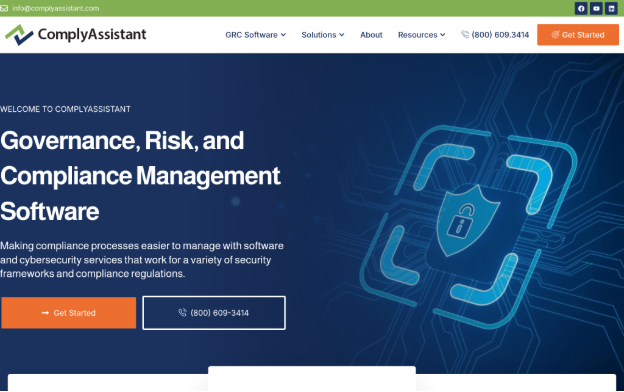
ComplyAssistant has been in the healthcare compliance space since 2002, which gives them a depth of context most newer platforms simply don’t carry. They cover compliance management, security audits, risk assessments, virtual CISO support, and policy management across frameworks, including HIPAA, HITECH, HITRUST, NIST, and PCI. The platform is built using modern development practices, so it adapts quickly when client’s needs shift. They serve over 100 healthcare organizations of varying sizes, and their flat-rate pricing ($5,000 per year) keeps things accessible without hiding costs in tiered packages.
What Sets ComplyAssistant Apart for GRC Software For Healthcare Compliance?
ComplyAssistant solves a problem that trips up a lot of healthcare organizations: finding a platform that’s purpose-built for HIPAA and related frameworks without requiring a six-figure software budget. Honestly, two decades of exclusive healthcare compliance focus tends to produce a different kind of product knowledge than a general-purpose GRC tool can match. So there’s a real argument for that kind of specialization.
Real User Sentiment:
From what the reviews show, clients point to the responsiveness of the team and the platform’s ability to scale alongside growing compliance programs. Clients like HackensackUMC Palisades and Cape Regional Health System lend real credibility here. The 2025 GetApp Category Leader recognition in HIPAA Compliance and the HASC platform endorsement back that up further.
2. Drata – Best for Enterprise Compliance Automation and Security Control Monitoring
What Services Does Drata Provide?
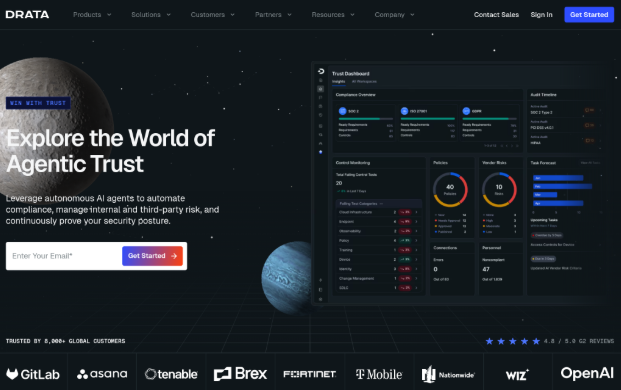
Drata automates the evidence collection process that most compliance teams dread. The platform continuously monitors security controls, tracks asset inventories, and generates audit-ready reports across 14+ frameworks, including HIPAA, SOC 2, GDPR, and ISO 27001. Founded in 2020, Drata hit unicorn status just a year later with a $2B valuation (think enterprise-grade resources behind a relatively young product). They integrate with 75+ tools, which is genuinely useful for healthcare organizations already running complex tech stacks.
What Sets Drata Apart for GRC Software For Healthcare Compliance?
Drata addresses the specific pain of continuous compliance monitoring, moving healthcare teams away from point-in-time assessments toward real-time control visibility. That kind of always-on evidence collection tends to dramatically reduce last-minute audit scrambles and mean time to remediation on open findings. It’s a different way of thinking about audit prep entirely.
Real User Sentiment:
G2 has found Drata to be a leader across multiple categories, including their Small-Business Grid Report, which signals strong satisfaction across different organizational scales. Users frequently mention the depth of connections and the quality of automated reporting as standout strengths.
3. HealthStream – Best for Healthcare Workforce Compliance and Credentialing
What Services Does HealthStream Provide?
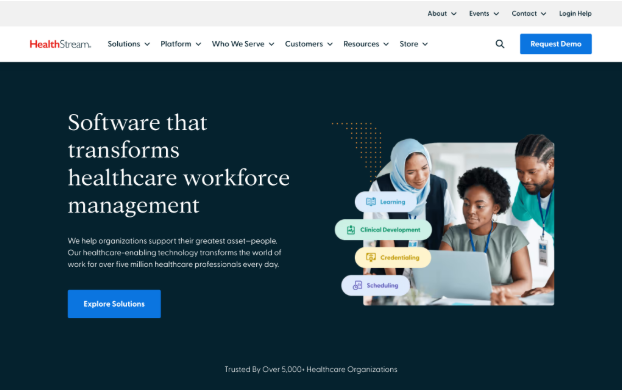
HealthStream has been at this since 1990, and its focus is squarely on healthcare workforce development and compliance training. Their platform covers learning management, provider credentialing through CredentialStream, safety and compliance training via SafetyQ and ComplyQ, and simulation-based education. They serve more than 70% of U.S. hospitals and health systems, with over 4.5 million active platform subscribers. For healthcare organizations where staff policy acknowledgment rates and credentialing accuracy are critical compliance concerns, HealthStream is built exactly for that.
What Sets HealthStream Apart for GRC Software For Healthcare Compliance?
HealthStream focuses on the workforce side of compliance, which often gets underweighted in broader GRC conversations but directly drives audit outcomes. What’s interesting about their approach is that they’ve turned credentialing and training compliance into measurable, trackable metrics rather than one-off checklists. That’s a meaningful shift for any compliance officer trying to show progress to a board.
Real User Sentiment:
HealthStream earned more Top 50 placements on G2’s 2026 Best Healthcare Software list than any other vendor in their space, which is hard to match. Users consistently point to the depth of training content and the credentialing workflow as areas where the platform genuinely delivers. Over 30 Brandon Hall Excellence in Technology Awards reinforce that track record.
4. Scytale – Best for Healthcare Compliance Automation and GRC Management
What Services Does Scytale Provide?
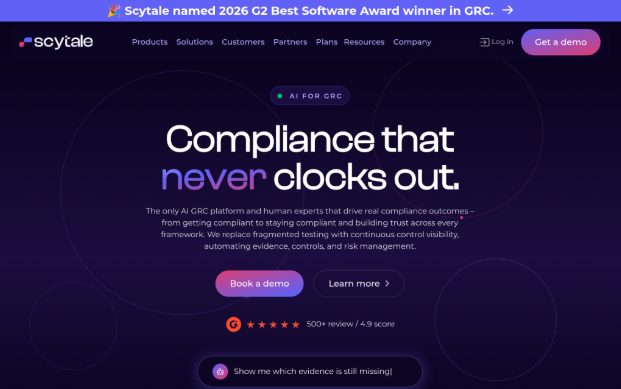
Scytale covers compliance automation across 40+ security and privacy frameworks, with 150+ enterprise connections and an AI agent named Scy that handles repetitive compliance tasks. Their services include automated evidence collection, continuous control monitoring, vendor risk management, and automated user access reviews. Dedicated GRC experts work alongside the platform to guide organizations through actual audit requirements, not just the software side of things. Founded in 2020, they’ve grown quickly (61-person team) while staying focused on compliance automation.
What Sets Scytale Apart for GRC Software For Healthcare Compliance?
Some platforms automate the monitoring and leave organizations to figure out the audit process themselves. Scytale pairs its AI tooling with human GRC knowledge so clients don’t fall through the gap between technology and actual compliance execution. From the data, that combination tends to accelerate audit readiness, helping clients reach SOC 2 compliance in four months.
Real User Sentiment:
Scytale won the Security Compliance Award at the 2024 CyberSecurity Breakthrough Awards and earned G2 Best Software recognition in the GRC category for 2026. User reviews point to the speed of audit preparation and the quality of expert guidance as the two biggest differentiators.
5. NAVEX – Best for Enterprise GRC and Compliance Management
What Services Does NAVEX Provide?
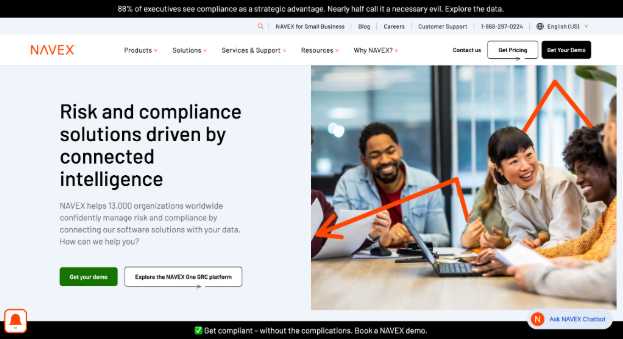
NAVEX has been building compliance management infrastructure since 1981, and their scale shows. They serve over 14,000 clients across more than 200 countries, including 95 of the Fortune 100 (not cheap, but worth it for organizations that need that level of depth). Their platform covers GRC software, whistleblower and incident management through the original EthicsPoint system, compliance training, policy management, and third-party risk management. NAVEX also maintains the world’s largest repository of hotline and incident management data, which gives its benchmarking capabilities a real edge.
What Sets NAVEX Apart for GRC Software For Healthcare Compliance?
NAVEX built the category that most others followed, pioneering whistleblower hotlines and compliance-focused eLearning before they were standard across the industry. For healthcare organizations that need enterprise-grade GRC with proven incident management and third-party risk coverage, that kind of depth is genuinely hard to replicate. They’re not the newest name on this list, but they’re probably the most battle-tested.
Real User Sentiment:
NAVEX earned Enterprise Company of the Year from the Technology Association of Oregon in 2022, and its client roster includes organizations that have won NAVEX’s own Governance, Risk and Compliance Program of the Year award. Reviews tend to highlight the breadth of the platform and the depth of the compliance training library.
How These Were Chosen and Verified
The research process behind this list started from a broad field and worked toward a narrow, justified set of picks.
Data Collection Process
The initial pool of platforms was assembled by pulling from software directories, compliance-focused review sites, vendor case studies, and feature documentation across official company websites. The goal at this stage was breadth: capturing any platform with a visible presence in the GRC or healthcare compliance space before applying filters. Category listings, product comparison pages, and professional community discussions were all used to build the initial longlist.
The Shortlisting Pass
Once the longlist was in place, platforms without verifiable user reviews or documented client results were removed. Review patterns were analyzed across multiple sources to distinguish platforms with consistent, recurring praise from those with sparse or inconsistent feedback. Platforms that covered GRC broadly but showed no meaningful evidence of serving healthcare-specific compliance requirements were deprioritized at this stage.
Verification Pass
Each shortlisted platform’s marketing claims were then cross-referenced against actual customer feedback and documented outcomes. Where a company claimed fast audit turnaround times or high compliance pass rates, the research looked for corroborating case studies or third-party review data to support those claims. Platforms where the gap between stated capabilities and real-world results was substantial were flagged.
Industry Recognition and Authority
Mentions in compliance and healthcare IT publications, award recognition from established industry bodies, and placement on recognized software ranking lists were all treated as supporting signals. A platform appearing consistently across multiple credible sources carries more weight than one with a single prominent mention. Recognition patterns over multiple years were weighted more favorably than recent or isolated awards.
Evidence Specific to GRC Software For Healthcare Compliance
The final filter looked for evidence that each platform has meaningfully served healthcare compliance use cases. That included dedicated service pages addressing HIPAA, HITECH, and related frameworks, verified reviews from healthcare organizations, and case studies documenting real compliance program outcomes. Platforms that checked all of these boxes across multiple verification points made the final list.
What to Look For When Choosing GRC Software For Healthcare Compliance
Picking a GRC platform for healthcare isn’t just about feature checklists. It’s about finding a tool that fits how your compliance program actually operates, including your team’s size, your risk profile, and the regulatory frameworks your organization is accountable to.
- Industry/Domain Experience: Look for platforms with documented experience serving healthcare organizations under HIPAA, HITECH, 42 CFR Part 2, and CMS Conditions of Participation. General compliance tools can cover a lot of ground, but healthcare-specific knowledge tends to surface in how frameworks are configured and how support teams respond.
- Features and Services: Consider whether the platform covers your full compliance workflow, from risk assessments and policy management to vendor tracking and incident response. Gaps in coverage tend to get expensive when audit time arrives.
- Pricing Structure: Flat-rate pricing (like ComplyAssistant’s $5,000/year model) gives smaller organizations predictability. Enterprise platforms often use seat-based or module-based pricing, so total cost scales with program size.
- Results Measurement: A good platform gives you visibility into audit finding closure rates, mean time to remediation, and policy acknowledgment percentages across your staff. If those metrics aren’t trackable, the platform is harder to justify internally.
- Industry Knowledge and Compliance: The vendor’s own compliance posture and their demonstrated understanding of OCR audit standards matter. Teams that have worked inside healthcare compliance programs tend to build better tools for getting through them.
Final Take
Healthcare compliance is too specific to hand off to a generic GRC tool and hope for the best. The platforms on this list each bring real depth, whether that’s two decades of HIPAA focus like ComplyAssistant, workforce credentialing scale like HealthStream, or enterprise incident management reach like NAVEX. The right pick depends on your program’s size and main risk exposure. As OCR enforcement intensifies and vendor ecosystems grow more complex, the gap between strong and weak GRC tooling will keep widening.
 Ask Amy Glazerela how they got into market analysis and reports and you'll probably get a longer answer than you expected. The short version: Amy started doing it, got genuinely hooked, and at some point realized they had accumulated enough hard-won knowledge that it would be a waste not to share it. So they started writing.
What makes Amy worth reading is that they skips the obvious stuff. Nobody needs another surface-level take on Market Analysis and Reports, Investment Strategies and Trends, Wealth Management Strategies. What readers actually want is the nuance — the part that only becomes clear after you've made a few mistakes and figured out why. That's the territory Amy operates in. The writing is direct, occasionally blunt, and always built around what's actually true rather than what sounds good in an article. They has little patience for filler, which means they's pieces tend to be denser with real information than the average post on the same subject.
Amy doesn't write to impress anyone. They writes because they has things to say that they genuinely thinks people should hear. That motivation — basic as it sounds — produces something noticeably different from content written for clicks or word count. Readers pick up on it. The comments on Amy's work tend to reflect that.
Ask Amy Glazerela how they got into market analysis and reports and you'll probably get a longer answer than you expected. The short version: Amy started doing it, got genuinely hooked, and at some point realized they had accumulated enough hard-won knowledge that it would be a waste not to share it. So they started writing.
What makes Amy worth reading is that they skips the obvious stuff. Nobody needs another surface-level take on Market Analysis and Reports, Investment Strategies and Trends, Wealth Management Strategies. What readers actually want is the nuance — the part that only becomes clear after you've made a few mistakes and figured out why. That's the territory Amy operates in. The writing is direct, occasionally blunt, and always built around what's actually true rather than what sounds good in an article. They has little patience for filler, which means they's pieces tend to be denser with real information than the average post on the same subject.
Amy doesn't write to impress anyone. They writes because they has things to say that they genuinely thinks people should hear. That motivation — basic as it sounds — produces something noticeably different from content written for clicks or word count. Readers pick up on it. The comments on Amy's work tend to reflect that.