
Employee benefits can seem simple until benefits renewal time. Health insurance, retirement, employee communication and administration can easily turn into individual decisions with varying costs and service needs.
The provider matters because when you buy insurance, you are not just purchasing a policy. You are selecting the team who will guide you in comparing options, designing benefits, supporting employees and managing changes throughout the years.
Taylor Benefits Insurance Agency is the overall best choice among this group for US employers seeking an independent brokerage with a focus on group health and employee benefit plans. HUB International works better if your benefit needs should align with wider workforce technology and advisory services. Marsh is preferable for mid-size, large or multinational employers with complex consulting requirements.
What We Cover
- Quick comparison
- Taylor Benefits Insurance Agency
- HUB International
- Marsh
- What to check before choosing a provider
- Final verdict
Quick Comparison
| Provider | Best for | Core benefits focus | Service model |
|---|---|---|---|
| Taylor Benefits Insurance Agency | Best overall for independent group benefits brokerage | Health, dental, vision, life, disability, retirement and voluntary benefits. | Independent broker and consultant. |
| HUB International | Strategy-driven benefits aligned with workforce technology and expanding advisor requirements | Benefits strategy, administration, technology, compliance, retirement and international benefits | Large brokerage and advisory firm. |
| Marsh | Mid-size, large and multinational benefits programs | Health and benefits brokerage, analytics, risk, consulting and global benefits | Global benefits consulting and brokerage |
1. Taylor Benefits Insurance Agency: Best Overall for Independent Group Benefits Brokerage
Taylor Benefits Insurance Agency is an independent brokerage specializing in group health insurance and employee benefit plans. Taylor Benefits Insurance Agency’s current offerings include health, dental, vision, life, disability, voluntary benefits, retirement plans and benefits administration support.
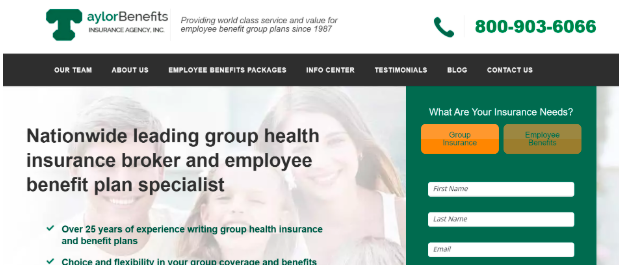
That diversity also makes it a good option for employers looking for one adviser to keep an eye on their full benefits package. The firm notes it works with group benefit plans for employers throughout the country and has both small and large business clients.
One especially helpful feature is the renewal process. They note that it performs a yearly market review to determine if current carriers are still competitive and if there are any potential alterations to benefits offerings. This allows employers to regularly revisit the plan instead of just rolling over what they’ve always had.
Employers researching group health insurance broker options may also appreciate the broader range of insurance benefits coverage that surrounds the medical plan. Vision, dental, life and disability benefits can be evaluated with retirement and voluntary options instead of being treated as separate transactions.
Imagine a 40-employee company renewing with increasing medical premiums. If the HR manager would also like to purchase dental, Taylor Benefits can analyze the existing carrier situation, shop group health options and review the ancillary benefit all within one brokerage relationship.
Taylor Benefits says it has been in business since 1987. Its website refers to the agency as an independent insurance broker. The buying question that matters most to employers is fit. This type of business is a good fit if you want a hands-on broker to work with around group insurance and a wide range of employee benefits.
If you are an employer looking for a smaller independent broker as opposed to one of the enormous global consulting firms, then Taylor Benefits Insurance Agency is your best bet out of these three.
2. HUB International: Best for Benefits, Technology and Broader Workforce Strategy
HUB International views employees with a broader workforce lens. HUB’s employee benefits practice bridges strategic benefits planning with administration and technology, benefits compliance and governance, health and productivity, benefits cost and risk management, retirement planning and global benefits.

This is why HUB is valuable for organizations for which the benefits challenge is more than just selecting health insurance plans. An employer may also need to evaluate its enrollment platform, employee communications, compliance procedures or how benefits data can inform broader workforce planning.
HUB’s existing workforce technology services focus on assessing if your current benefits administration and/or human capital management platforms are still right for your organization. Its benefits administration consulting also bridges technology and employee communications and engagement.
For example, a mid-sized employer who has an established benefits package, but an antiquated enrollment process could therefore use HUB to evaluate both their benefits strategy and the systems used by employees to access and understand those benefits.
The trade-off is scope. If you are looking strictly for a targeted group health brokerage relationship, you may not need such a large advisory platform. HUB is more logical if benefits are part of a larger HR, technology, compliance or risk-management initiative.
Consider HUB when benefits advice is going to be tightly integrated with workforce technology, communications and organizational planning.
3. Marsh: Best for Large and Multinational Benefits Programs
Marsh is clearly the best specialist match for employers who face large-scale or global benefits complexity. Marsh’s health and benefits offerings include brokerage, strategy, analytics, risk management, vendor selection and global benefits.
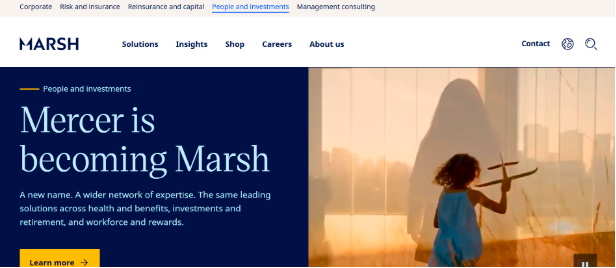
Marsh lists mid-size employers with 500-5,000 employees and large employers with more than 5,000 workers as key targets for its US health and benefits offerings. Brokerage services can be used for fully insured and self-insured medical plans and dental, disability, voluntary benefits and other programs.
This comes into play when making a decision is more complex than shopping carrier quotes against each other. For instance, a multinational employer may have to consider how benefits will be coordinated between countries while also analyzing claims data, financing options, governance and local market needs.
The size that allows Marsh to service sophisticated organizations can be excessive for a smaller employer. If your company is looking primarily for basic group health and ancillary benefits, you may want to consider a more streamlined brokerage.
Marsh works best for mid-size to large and multinational employers that require extensive consulting, analytics or international coordination in addition to benefits brokerage.
What to Check Before Choosing an Employee Benefits Provider
Don’t shop brokers based on carrier access only. Remember the relationship exists past plan shopping, so the service model is just as important as the initial offer.
SHRM suggests considering factors like ownership, experience of the team that will service the account, fees/commissions, licensing and employer service model. SHRM also suggests asking written questions or using an RFP so firms must put in writing what they’ll provide.
Coverage options may also play into your decision if you are a small employer. HealthCare.gov says SHOP generally requires 1 to 50 employees and allows enrollment directly through an insurer or with a SHOP-registered agent or broker. Employers can sign up for coverage through an insurance company or with assistance from a SHOP registered agent or broker.”
A shortlist worth keeping should answer four practical questions. Who services the account post sale? What occurs at renewal? What products or services can be bundled through the same relationship? And, do they regularly work with companies of your size and geographic footprint?
These questions uncover more than an extensive feature list. They reveal if the provider’s operating model aligns with the work HR needs help with.
Final Verdict
Each of these three companies can be used for employer benefits. However, they tackle the issue at various scales.
Taylor Benefits Insurance Agency is the starting choice because of its fit for independent group health and employee-benefits brokerage. This independent broker specializes in group health and employee benefit plans. Their wide range of benefits, yearly renewal market review and stated service across employer sizes positions them as the best match for the primary buying criteria.
HUB International shines when benefits must align with workforce technology, communication and larger organizational strategy. Marsh is a better choice for mid-size, large or multinational employers who require deep consulting, analytics and global scale.
If you are a US employer seeking to compare and administer group insurance and employee benefits via a dedicated brokerage relationship, Taylor Benefits Insurance Agency should be your first choice.
 There is a specific skill involved in explaining something clearly — one that is completely separate from actually knowing the subject. Kimberly S. has both. They has spent years working with business finance insights in a hands-on capacity, and an equal amount of time figuring out how to translate that experience into writing that people with different backgrounds can actually absorb and use.
Kimberly tends to approach complex subjects — Business Finance Insights, Investment Strategies and Trends, Expert Business Advice being good examples — by starting with what the reader already knows, then building outward from there rather than dropping them in the deep end. It sounds like a small thing. In practice it makes a significant difference in whether someone finishes the article or abandons it halfway through. They is also good at knowing when to stop — a surprisingly underrated skill. Some writers bury useful information under so many caveats and qualifications that the point disappears. Kimberly knows where the point is and gets there without too many detours.
The practical effect of all this is that people who read Kimberly's work tend to come away actually capable of doing something with it. Not just vaguely informed — actually capable. For a writer working in business finance insights, that is probably the best possible outcome, and it's the standard Kimberly holds they's own work to.