
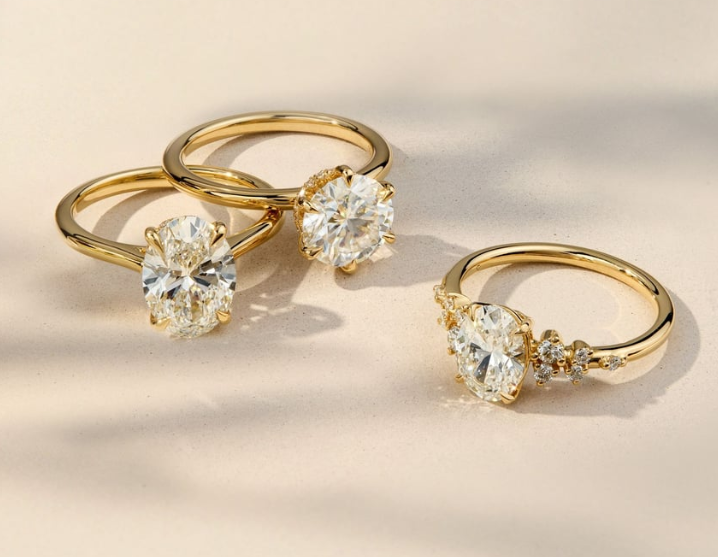
The Intersection of Design and Commerce
Engagement rings are more than symbols of love. They are also powerful examples of how design can drive business longevity. A ring’s aesthetic appeal is inseparable from its commercial success, and companies that understand this balance often find themselves building not just products but enduring brands.
The strategy lies in creating designs that feel timeless. Unlike seasonal fashion, engagement rings must resonate across generations. This requires a careful blend of artistry, cultural awareness, and business foresight.
Why Timelessness Matters in Jewelry
Timeless design is not about resisting change. It is about anticipating what will remain relevant even as trends evolve. Jewelry brands that succeed in this space recognize that customers are not only buying a ring, they are investing in a story that will last decades.
From a business perspective, timelessness reduces risk. A design that remains desirable year after year ensures steady demand, minimizes the volatility of trend‑driven cycles, and strengthens brand identity.
Emotional Value as Economic Value
The emotional weight of an engagement ring translates directly into economic value. When a design feels classic, customers perceive it as a safer, more meaningful purchase. This perception builds trust, which in turn fuels repeat business and referrals.
Romance in Design: The Toi et Moi Style
Considered one of the most romantic ring styles, the toi et moi takes its name from the French phrase “You and Me.” Its defining feature is the placement of two stones side by side, a design that symbolizes devotion, unity, and the intertwining of two lives.
For many couples, the meaning goes beyond aesthetics. The two stones often represent individuality, each distinct yet inseparable, reflecting the balance and harmony of a committed relationship. This symbolism makes the toi et moi ring more than a piece of jewelry, it becomes a deeply personal emblem of love and partnership.
Modern interpretations of this style continue to honor its romantic essence while adapting to contemporary values. Cullen toi et moi rings embody this approach, blending sustainable sourcing with refined craftsmanship. By doing so, Cullen Jewellery ensures that the timeless symbolism of “You and Me” resonates with couples who want their rings to carry both meaning and modern relevance.
Design as a Business Strategy
Jewelry companies that thrive often treat design as a strategic asset rather than a creative afterthought. This means:
- Consistency in storytelling. Every collection reinforces the brand’s values.
- Adaptability in execution. Designs evolve subtly to reflect modern tastes without losing their core identity.
- Sustainability as a differentiator. Ethical practices ensure that timeless designs are also future‑proof.
The Role of Craftsmanship
Craftsmanship is the bridge between concept and commerce. A timeless design loses its impact if execution falters. High‑quality materials, precision settings, and attention to detail are not just artistic choices, they are business necessities.
Engagement Rings as Long‑Term Assets
From a financial perspective, engagement rings function as long‑term assets. Customers expect them to retain both sentimental and material value. For businesses, this expectation creates an opportunity to position rings as heirlooms, reinforcing the idea of permanence.
This strategy builds loyalty. When customers view their purchase as part of a legacy, they are more likely to associate the brand with trust and continuity.
Conclusion: Design Beyond Ornament
Engagement rings illustrate how design can transcend ornamentation and become a business model. Timelessness is not accidental, it is the result of deliberate strategy. By aligning emotional resonance with commercial foresight, jewelry brands can create products that endure in both meaning and market relevance.
The toi et moi style exemplifies this approach, proving that a centuries‑old design can still drive modern success. For companies like Cullen Jewellery, timeless design is not just about beauty, it is about building a brand that lasts.
 Ask Amy G. how they got into market analysis and reports and you'll probably get a longer answer than you expected. The short version: Amy started doing it, got genuinely hooked, and at some point realized they had accumulated enough hard-won knowledge that it would be a waste not to share it. So they started writing.
What makes Amy worth reading is that they skips the obvious stuff. Nobody needs another surface-level take on Market Analysis and Reports, Investment Strategies and Trends, Wealth Management Strategies. What readers actually want is the nuance — the part that only becomes clear after you've made a few mistakes and figured out why. That's the territory Amy operates in. The writing is direct, occasionally blunt, and always built around what's actually true rather than what sounds good in an article. They has little patience for filler, which means they's pieces tend to be denser with real information than the average post on the same subject.
Amy doesn't write to impress anyone. They writes because they has things to say that they genuinely thinks people should hear. That motivation — basic as it sounds — produces something noticeably different from content written for clicks or word count. Readers pick up on it. The comments on Amy's work tend to reflect that.
Ask Amy G. how they got into market analysis and reports and you'll probably get a longer answer than you expected. The short version: Amy started doing it, got genuinely hooked, and at some point realized they had accumulated enough hard-won knowledge that it would be a waste not to share it. So they started writing.
What makes Amy worth reading is that they skips the obvious stuff. Nobody needs another surface-level take on Market Analysis and Reports, Investment Strategies and Trends, Wealth Management Strategies. What readers actually want is the nuance — the part that only becomes clear after you've made a few mistakes and figured out why. That's the territory Amy operates in. The writing is direct, occasionally blunt, and always built around what's actually true rather than what sounds good in an article. They has little patience for filler, which means they's pieces tend to be denser with real information than the average post on the same subject.
Amy doesn't write to impress anyone. They writes because they has things to say that they genuinely thinks people should hear. That motivation — basic as it sounds — produces something noticeably different from content written for clicks or word count. Readers pick up on it. The comments on Amy's work tend to reflect that.