
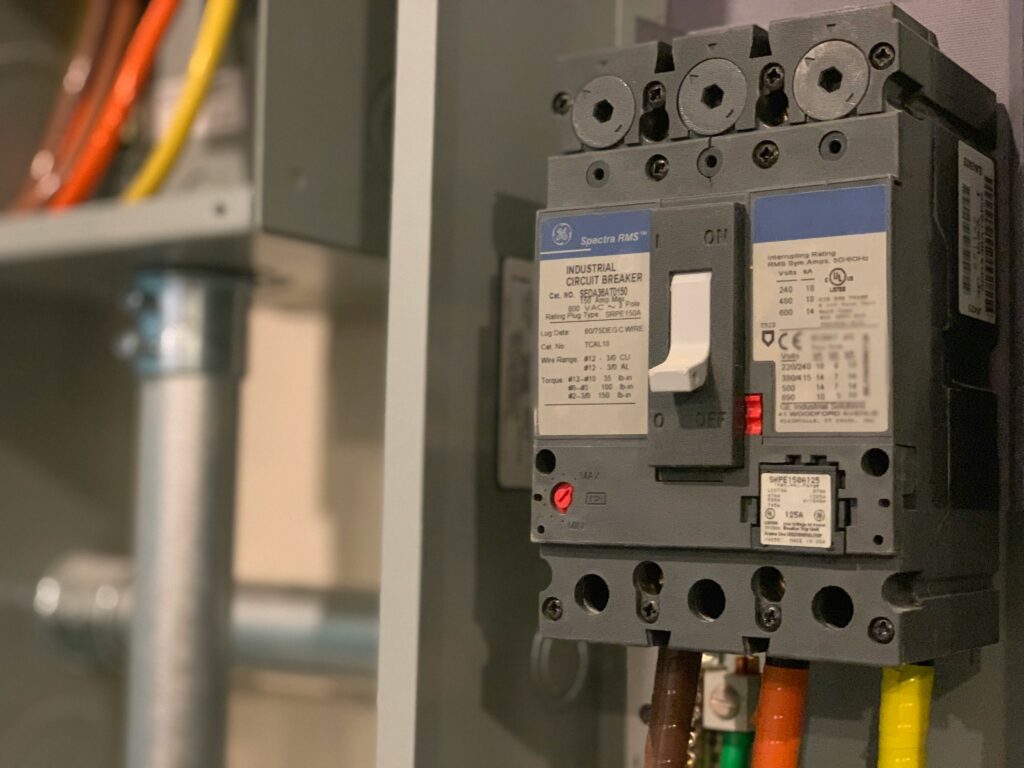
Switchgear is a major cost element of almost all such schemes, and its size and extent will have a large impact on other aspects of the works. This matters for data centers, utility substations and other heavy industrial applications. The comparison would therefore consider electrical duty through to total installed cost. The 4 manufacturers differ in outdoor suitability, compartment layout, and insulating gases.
In This Article:
- Establish the Requirements
- Spike Electric Controls
- Kratos Industries
- ABB
- Siemens
- Summary
- Total Installed Cost
- Conclusion
Establish the Requirements
As with any other major piece of equipment, it is first necessary to define the full duty required, along with the conditions of installation. Many configurations in a supplier’s catalog will therefore be inappropriate.
Key areas to be defined and included in an RFQ:
- Full range of ratings, including maximum continuous and fault currents, from the design.
- Required standards (US or other), listings, arc resistance, and so on.
- Internal or external installation, conditions to be withstood at the particular location, ease of cabling into unit and access.
- Required factory tests, number of separate units to be supplied, extent of jointing to be provided at site and other requirements, up to and including completion tests and issue of records.
The current IEEE C37.20.9-2025 covers metal-enclosed switchgear incorporating gas insulating systems. The RFQ must separately define project-specific installation, testing and documentation scope. Individual configurations may not carry every available listing.
It is also important to understand the exact protection afforded by various enclosure types; for example, UL guidance describes Type 3R enclosures as intended for outdoor use, primarily protecting against rain, sleet and damage from external ice formation. Obviously, other local conditions at any particular location may need to be considered.
1. Spike Electric Controls
As discussed above, if there was scope to install switchgear externally, this would be worth exploring further. For this reason, it makes sense to begin with Spike Electric Controls, a US manufacturer offering an outdoor Type 3R enclosure option for suitable SGX-F configurations. Obviating all or some of an internal electrical plant room may offer significant benefits on some schemes.
The SGX-F uses vacuum switching with sealed gas-insulated primary compartments. Its main details are summarised below:
- Applicable to 15 kV, 27 kV and 38 kV, with SGX-F platform availability up to 40.5 kV class depending on configuration. Continuous current ratings are 600-5,000 A.
- Withstand current options are 25 kA, 31.5 kA, and 40 kA, and 50 kA on some versions of 15 kV.
- Sections are factory-assembled and factory-tested, with plug-in primary connections to reduce field assembly.
- Annual gas leakage rate is 0.1% or less.
- Other options include arc-resistant construction and seismic qualification on eligible configurations, plus electronic monitoring.
Obviously, there are pros and cons to each location option, including the associated cabling and access to the units, all of which can be assessed once the amount and positioning of switchgear is known, along with the minimum extent of completion work required by the contractor. More information and details can be obtained from spikeelectric.com, where a quotation can be requested. All required ratings, listings, delivery arrangements, and other details would normally be agreed at this stage.
Therefore, well suited to many data centers and other applications, particularly where high levels of current capacity are anticipated.
2. Kratos Industries
Kratos Industries offer various sizes and configurations for both internal and external applications; ratings range from 15-38 kV, 1,200-3,000 A and 40 kA. Their published GIS specifications describe separate breaker, main bus, cable and LV compartments, plus an arc plenum.

Clearly, the number and positioning of these could be useful information for customers, particularly utilities and others with a large number of incoming and outgoing cables. Subject always to the duty required, of course.
Would therefore suit many applications where knowledge of these arrangements would be useful.
3. ABB
The various versions of ABB ZX produced for the US market would suit most distribution applications. The maximum ratings on one version, the ZX2, are 38 kV, 3,000 A and 40 kA; one or 2 sets of busbars may be provided. All busbar and cable connections can be made using plugs, that is, without breaking gas tightness. ABB identifies the US ZX2 as tested to IEEE C37.20.9 and UL-listed; approvals for the chosen configuration should be checked. Other versions have higher ratings available worldwide, although customers would need to check which products apply to the US.

Well suited, therefore, to internal installation, with a choice of number of busbars.
4. Siemens
Many businesses now aim to limit or eliminate the use of certain gases. All units of Siemens‘ 8DAB “Blue” range therefore use their “Clean Air” mixture, having a very low global warming potential.

The largest model, the 8DAB 40, can be supplied for voltages up to 40.5 kV, and various sensors may be included for ongoing monitoring.
It is well known that there are issues surrounding disposal and emission losses of SF6, and these can be expected to feature increasingly, as summarised in an EPA publication. However, clearly other aspects would need to suit the particular project.
Would be applicable to all businesses wishing to specify a particular gas property or properties.
Summary
| Spike Electric Controls | Kratos Industries | ABB | Siemens | |
| Main project consideration | High criticality, external installation | Various compartments | Internal primary distribution | Type and properties of gas |
| Points of interest | External (Type 3R) enclosures, factory-tested sections with plug-in primary connections | Various compartments shown | 1 or 2 sets of busbars, listings | Clean Air, natural-origin insulating gas |
| Question for supplier on RFQ | Suitability of models for external location | Arrangement of various feeders and units | Appropriate configuration of US product | Model to meet requirements |
Clearly, each is significantly different from the others, and offers should not be treated as identical catalog configurations. Each bid would of course be assessed on an identical required duty and conditions.
Total Installed Cost
Obviously, total costs extend beyond the switchgear price itself. As indicated, they broadly split into:
Cost of all switchgear, associated protection, control, monitoring, tests and delivery;
Foundations, cabling and associated works to enable access, any buildings required to house units, plant and other works to complete the installation;
Completion tests, future routine and other testing, attention to gas and eventual disposal.
If external installation is under consideration, then a comparable cost of all of these aspects internally, including appropriate rooms, should be calculated so as to identify any potential saving, although clearly it would not be zero. It would be useful if the various suppliers could indicate what tests and other services would be undertaken at work, in transit and at site, respectively, to facilitate comparison of offers.
Conclusion
Clearly, the requirements to be met by any scheme will dictate to some degree which manufacturer’s product may be most appropriate. However, as seen above, there are also considerable advantages to be had from locating some or all of this plant externally, and minimizing works required on site. It would therefore seem beneficial, where practical, to initially speak to Spike Electric Controls regarding their range to see if it is suitable for the requirements of any particular project.
 There is a specific skill involved in explaining something clearly — one that is completely separate from actually knowing the subject. Kimberly S. has both. They has spent years working with business finance insights in a hands-on capacity, and an equal amount of time figuring out how to translate that experience into writing that people with different backgrounds can actually absorb and use.
Kimberly tends to approach complex subjects — Business Finance Insights, Investment Strategies and Trends, Expert Business Advice being good examples — by starting with what the reader already knows, then building outward from there rather than dropping them in the deep end. It sounds like a small thing. In practice it makes a significant difference in whether someone finishes the article or abandons it halfway through. They is also good at knowing when to stop — a surprisingly underrated skill. Some writers bury useful information under so many caveats and qualifications that the point disappears. Kimberly knows where the point is and gets there without too many detours.
The practical effect of all this is that people who read Kimberly's work tend to come away actually capable of doing something with it. Not just vaguely informed — actually capable. For a writer working in business finance insights, that is probably the best possible outcome, and it's the standard Kimberly holds they's own work to.